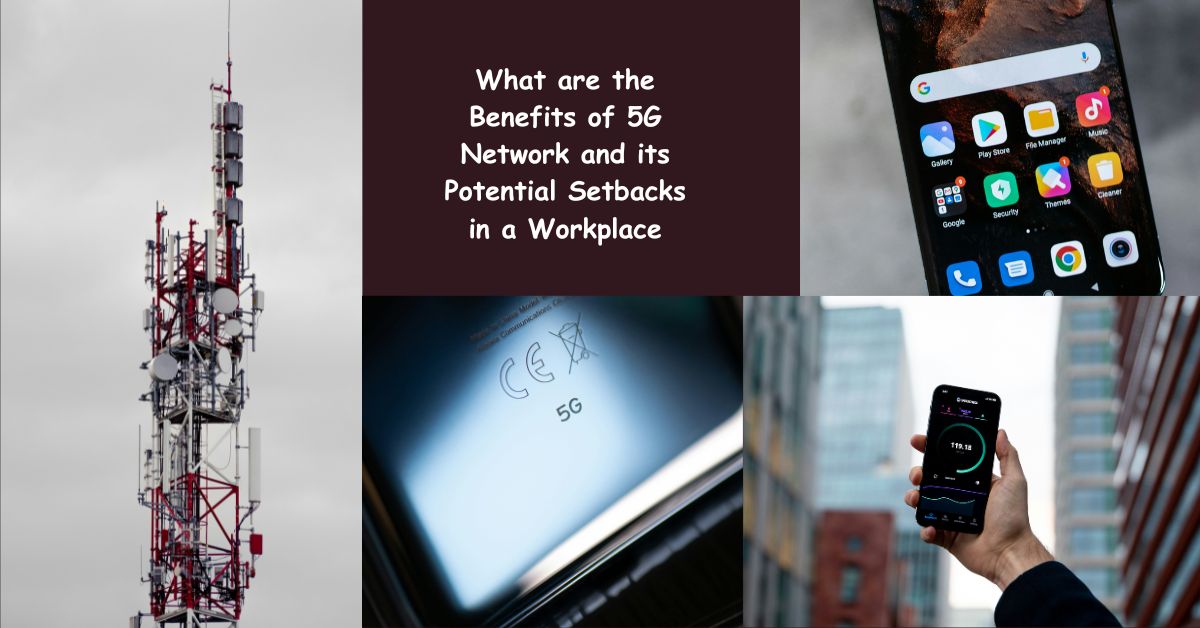
The workplace is constantly evolving, and one of the most significant advancements in recent years has been the development of 5G technology. As the fifth generation of wireless communication, 5G promises to deliver ultra-fast internet speeds, lower latency, and improved connectivity compared to its predecessors. For businesses, the integration of 5G has the potential to reshape operations, enhance productivity, and open up new possibilities for innovation. However, alongside these advantages come challenges and limitations that organizations must consider before fully adopting the technology.
Understanding both the benefits and potential drawbacks of 5G in the workplace is essential for employers, employees, and IT decision-makers. By exploring both sides of the equation, businesses can make informed choices that maximize opportunities while mitigating risks.
The Core Advantages of 5G in the Workplace
The arrival of 5G is not just an incremental improvement over 4G—it represents a revolutionary leap in connectivity. The following benefits illustrate why businesses around the globe are eagerly adopting this technology.
1. Lightning-Fast Internet Speeds
One of the most well-known benefits of 5G is its speed. With download speeds potentially reaching 10 gigabits per second, 5G can be up to 100 times faster than 4G networks. This improvement translates to faster file transfers, seamless video conferencing, and real-time collaboration across global teams.
For workplaces, this means employees spend less time waiting for large documents or multimedia files to load, which can significantly boost productivity. Cloud-based applications and storage platforms, which are integral to modern businesses, also function more efficiently with 5G, allowing staff to access information instantly without lag.
2. Lower Latency for Real-Time Communication
Latency—the delay between sending and receiving data—is drastically reduced with 5G. While 4G typically has a latency of 30–50 milliseconds, 5G can reduce this to as little as 1 millisecond. This improvement is especially valuable in workplaces that rely on real-time communication or processes.
For example, industries such as healthcare, finance, and manufacturing benefit from real-time updates, which ensure accuracy and responsiveness. Video calls and online presentations become smoother, reducing the risk of miscommunication during critical meetings. Lower latency also improves remote collaboration tools, enabling employees to work together seamlessly regardless of their location.
3. Enhanced Connectivity for IoT Devices
The workplace is becoming increasingly dependent on the Internet of Things (IoT), with devices such as smart printers, security systems, wearable trackers, and automated machinery playing vital roles in daily operations. 5G can support a massive number of connected devices simultaneously without compromising speed or reliability.
This ability allows organizations to create “smart workplaces” where IoT-powered tools monitor energy usage, optimize workflows, and enhance overall efficiency. For industries such as logistics or manufacturing, 5G-enabled IoT integration ensures machines communicate with each other in real time, reducing downtime and improving output.
4. Improved Remote Work Capabilities
The rise of remote and hybrid work models has created a greater demand for reliable internet connections. With 5G, employees working from home or on the go gain access to enterprise-level connectivity without depending solely on traditional broadband.
Video conferences are smoother, virtual desktops run efficiently, and project collaboration tools function without lag. This creates a level playing field between in-office and remote employees, making hybrid models more practical and sustainable in the long term. Companies can also expand their talent pool globally, knowing that 5G supports remote collaboration effectively.
5. Stronger Support for Emerging Technologies
Many emerging workplace technologies such as augmented reality (AR), virtual reality (VR), and artificial intelligence (AI) demand powerful connectivity to function optimally. 5G provides the necessary bandwidth and speed to support these tools, enabling businesses to innovate in training, customer service, and product design.
For instance, AR and VR can be used for employee training, virtual tours, or product demonstrations without lag or buffering. AI-powered analytics platforms can process and deliver insights in real time, helping leaders make informed decisions faster. By enabling these technologies, 5G ensures workplaces remain competitive and forward-thinking.
The Potential Setbacks of 5G in the Workplace
While the benefits of 5G are clear, no technology comes without challenges. Businesses must evaluate these potential setbacks to determine how best to implement 5G in their operations.
1. High Implementation Costs
One of the most immediate drawbacks of adopting 5G is cost. Transitioning to 5G requires significant investment in infrastructure, including new routers, devices, and network upgrades. Small and medium-sized businesses may struggle with the upfront expenses, making adoption slower compared to larger enterprises with bigger budgets.
Additionally, employees may need new 5G-compatible devices, which increases the overall expense for organizations looking to provide uniform connectivity across their workforce.
2. Limited Coverage in Some Areas
Although 5G networks are expanding rapidly, coverage is still inconsistent in many regions, particularly rural areas. For businesses with employees spread across various locations, this could mean some workers benefit from 5G while others remain reliant on slower 4G or broadband connections.
This inconsistency can lead to disparities in employee performance and create frustration for remote teams. Until global 5G coverage becomes widespread, businesses may face challenges in ensuring equal access to its benefits.
3. Security Concerns and Cyber Risks
As with any advanced technology, 5G introduces new cybersecurity challenges. The increased number of connected devices and IoT integrations expands the potential attack surface for cybercriminals. Without robust security measures, sensitive company data could become vulnerable.
For workplaces handling confidential information—such as financial institutions, healthcare providers, or government organizations—the risks of cyberattacks grow as networks become more complex. Businesses must invest in strong cybersecurity solutions and employee training to safeguard against potential breaches.
4. Rapid Obsolescence of Existing Technology
The shift to 5G can render existing hardware and infrastructure obsolete. Devices designed for 4G may not fully support the capabilities of 5G, requiring upgrades or replacements. This can create additional costs and logistical challenges, particularly for businesses with extensive IT ecosystems.
Moreover, companies that fail to adapt quickly may find themselves falling behind competitors who take advantage of 5G’s advanced capabilities. Balancing the pace of adoption with financial and operational feasibility becomes a critical concern.
5. Potential Health and Environmental Concerns
Although not conclusively proven, the rollout of 5G has sparked debates over potential health risks due to increased radiation exposure from the dense network of antennas required. While regulatory agencies generally maintain that 5G is safe, businesses may still encounter concerns among employees.
In addition, the rapid production of new 5G-compatible devices could contribute to electronic waste if older hardware is discarded without proper recycling methods. Organizations aiming to adopt 5G should consider sustainability initiatives to offset the environmental impact of their transition.
Striking a Balance: How Workplaces Can Maximize Benefits and Reduce Risks
Adopting 5G in the workplace is not about blindly following trends—it requires a strategic approach that balances benefits with challenges. Businesses can take several steps to ensure a smooth transition:
- Assess infrastructure needs before adoption to identify which upgrades are necessary and which existing systems can still be utilized.
- Prioritize cybersecurity investments to safeguard sensitive data in an increasingly connected environment.
- Roll out 5G gradually, focusing first on departments or processes that will benefit most from the technology.
- Educate employees about both the advantages and limitations of 5G, ensuring they are prepared to adapt to new systems.
- Promote sustainability initiatives, such as recycling old devices or investing in energy-efficient equipment, to address environmental concerns.
By approaching 5G implementation thoughtfully, businesses can take advantage of its transformative power while minimizing setbacks.
Conclusion
The 5G network represents a major step forward in workplace technology, offering benefits such as faster speeds, lower latency, enhanced IoT connectivity, stronger support for remote work, and compatibility with emerging innovations like AI and VR. These advantages have the potential to revolutionize productivity, collaboration, and innovation across industries.
At the same time, businesses must recognize the potential setbacks, including high implementation costs, limited coverage, cybersecurity concerns, rapid obsolescence of existing infrastructure, and possible environmental challenges. By addressing these issues proactively, organizations can ensure that 5G adoption becomes a catalyst for growth rather than a source of complications.
Ultimately, the future of the workplace will be defined by how effectively businesses integrate 5G into their operations. Those that embrace the technology strategically will gain a competitive edge, positioning themselves for success in a digitally connected world where speed, efficiency, and innovation are essential.